

The Knights of Rhodes
- The Knights of Rhodes
- The knightly state
- The Grand Magisters of the Knights of St. John
- The Grand Magister d' Aubusson
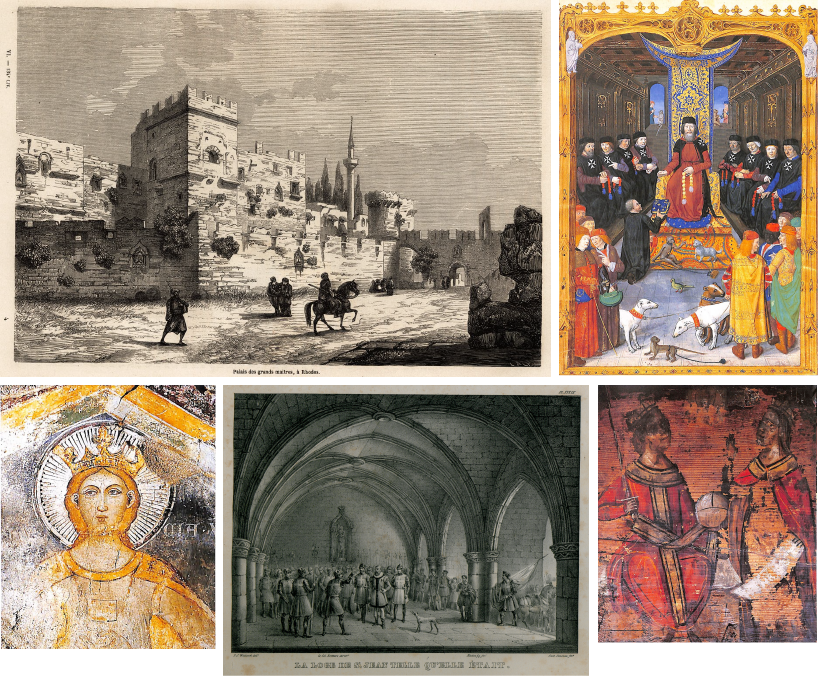
- The Magister's court
- Black Death
- The “language” of Auvergne
The Order of the Knights of St. John was a Roman Catholic military and medical order founded in Palestine in 1113 AD to operate a hospital for pilgrims arriving in the Holy Land. Its patron is Saint John the Baptist, from whom the order takes its name.
After the capture of Jerusalem and the fall of Acra (1292), the knights initially fled to Cyprus, then captured Rhodes in 1309 and settled there, assuming the name "Knights of Rhodes". They organized, fortified and governed the island for 213 years, until its conquest by the Ottomans in 1522, when they fled to Malta via Crete. Their presence made a profound impression on the history of the island and the Eastern Mediterranean, while acting as a deterrent to Muslim attacks from the east.
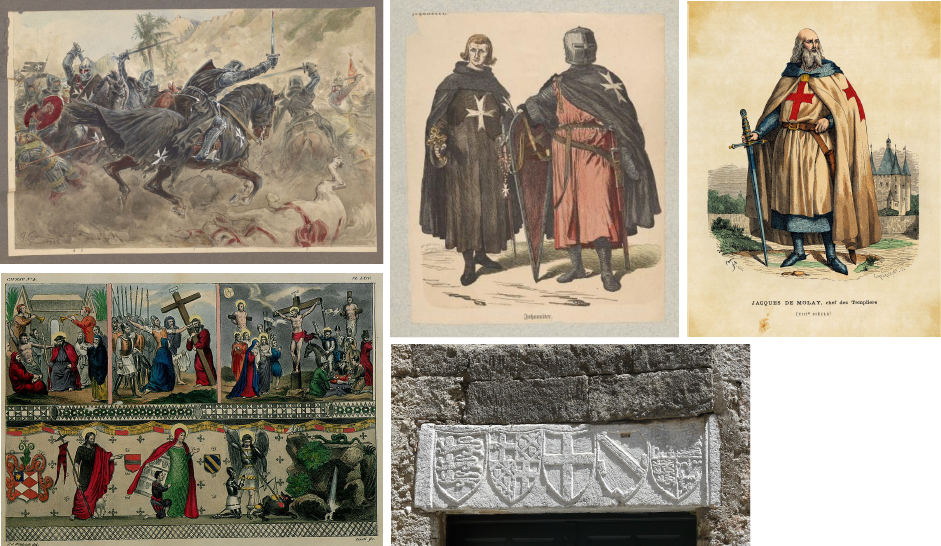
The Knights of Rhodes, or monastic state of the Knights of St. John of Rhodes, included Rhodes and most of the islands of the Dodecanese, as well as territories on the Asia Minor coast. Its administration had a strict, military-style hierarchy and consisted of three classes: knights, chaplains and sergeants. The members of the order initially belonged to seven and later eight "languages", corresponding, so to speak, to the ethnicities they belonged to. The knights were necessarily descended from noble families and from them came the Grand Magister, as well as the leaders of the languages and all the officials.
The Knights of St. John were a single and indivisible multinational body whose members were supplied by each “language”. The languages, with their hierarchical ranking, were: the language of Provence, Auvergne, France, Italy, Aragon, which was later divided into Aragon and Castile, England and Germany.
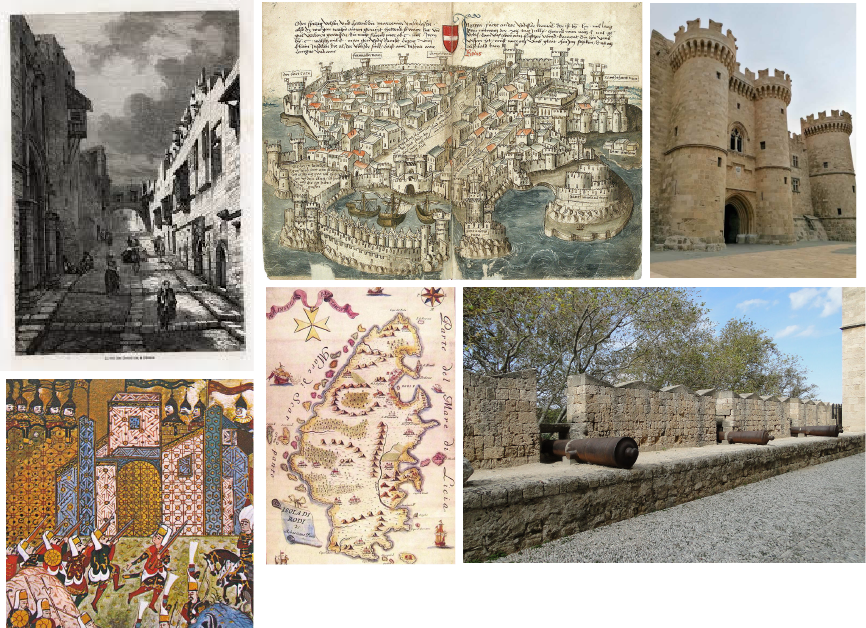
The supreme commander of the order was the Grand Magister. His office was for life, he had to be a nobleman of the upper class and was elected by the other knights. He governed together with his council and was controlled only by the general council. He supervised all the operations of the order, both military and commercial, and was accountable only to the Pope himself, regarding the assets of the order.
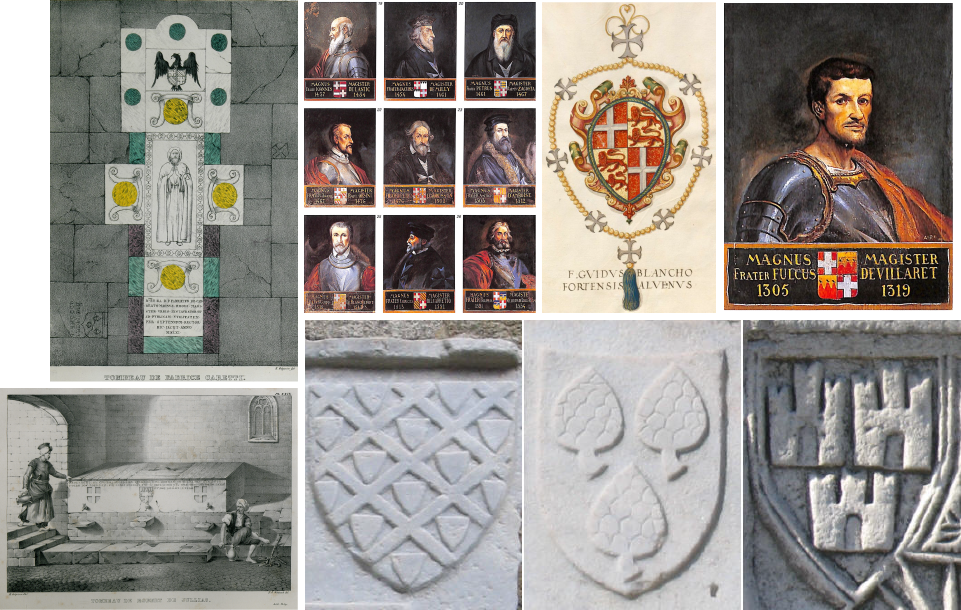
The first Grand Magister was the Frenchman Foulques de Villaret between 1305 and 1319. He founded the knightly state, organized it, and built the fortresses in Rhodes and their other dominions.
Philippe de Villiers de L'Isle-Adam was the last Grand Magister of Rhodes and the first of Malta, holding the office from 1521 to 1534. He was forced to surrender Rhodes to Suleiman the Magnificent in 1522, after a long siege.
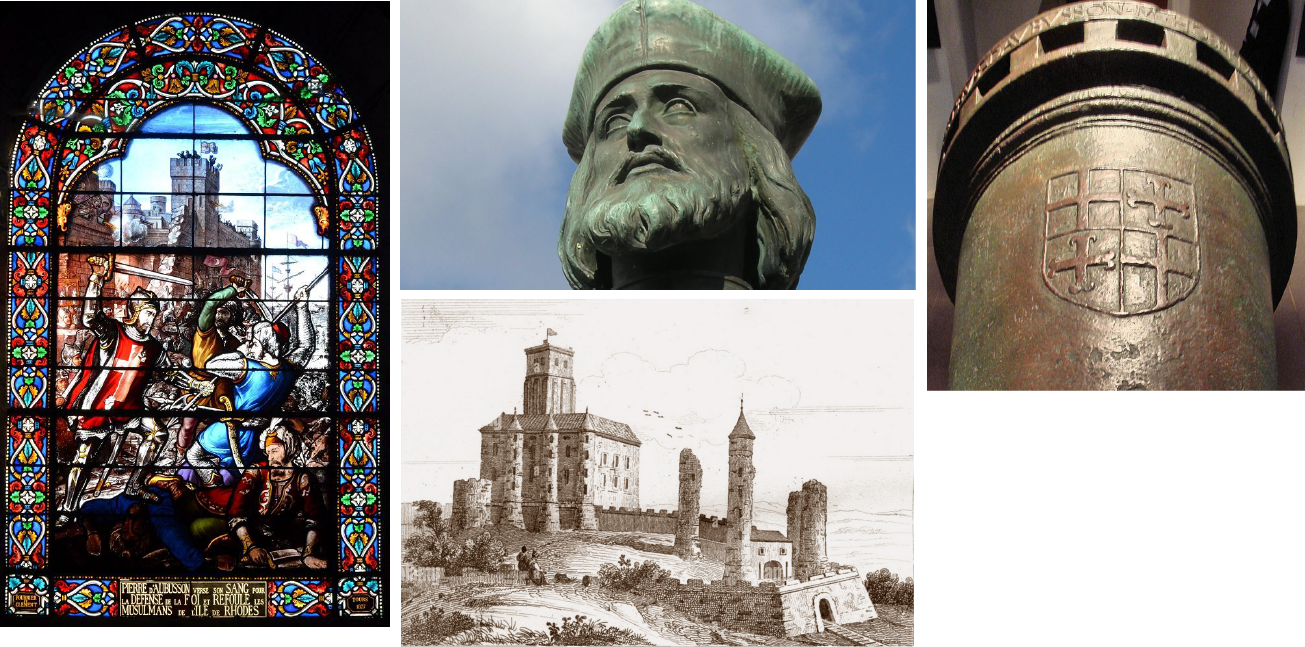
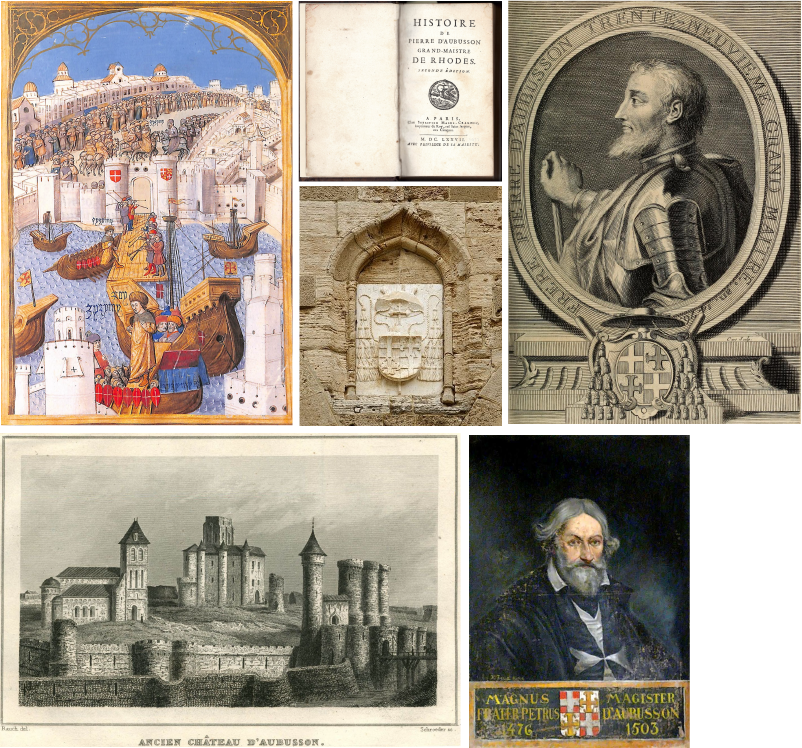
Pierre d' Aubusson (1423-1503) was one of the most dynamic Grand Magisters of the Order of the Knights of St. John. He was distinguished mainly for the successful defense of Rhodes during the siege of 1480 by Ottoman troops.
He was born in 1423 in Monteil-au-Vicomte of Auvergne in central France. He entered the Order of St. John around 1450 and after several years of service was proclaimed on 8 June 1476 as the fortieth Grand Magister of the Knights of Rhodes.
Anticipating a major Turkish attack, he himself assumed the general direction of the fortification works, as he had considerable knowledge in engineering.
In May 1480, he led the defense of Rhodes during the siege and successfully repelled the powerful Ottoman forces. For this victory and for the diplomatic role he had played in the detention of Prince Cem, brother of Sultan Bayezid, as well as for the good administration of the islands, he was ordained a cardinal by Pope Innocent in 1489 and was honored with the title of Legate of Asia.
P. d'Aubusson died on July 3, 1503 in Rhodes. Due to the existence of his coat of arms on various structures, we know of his extensive building and fortification work.
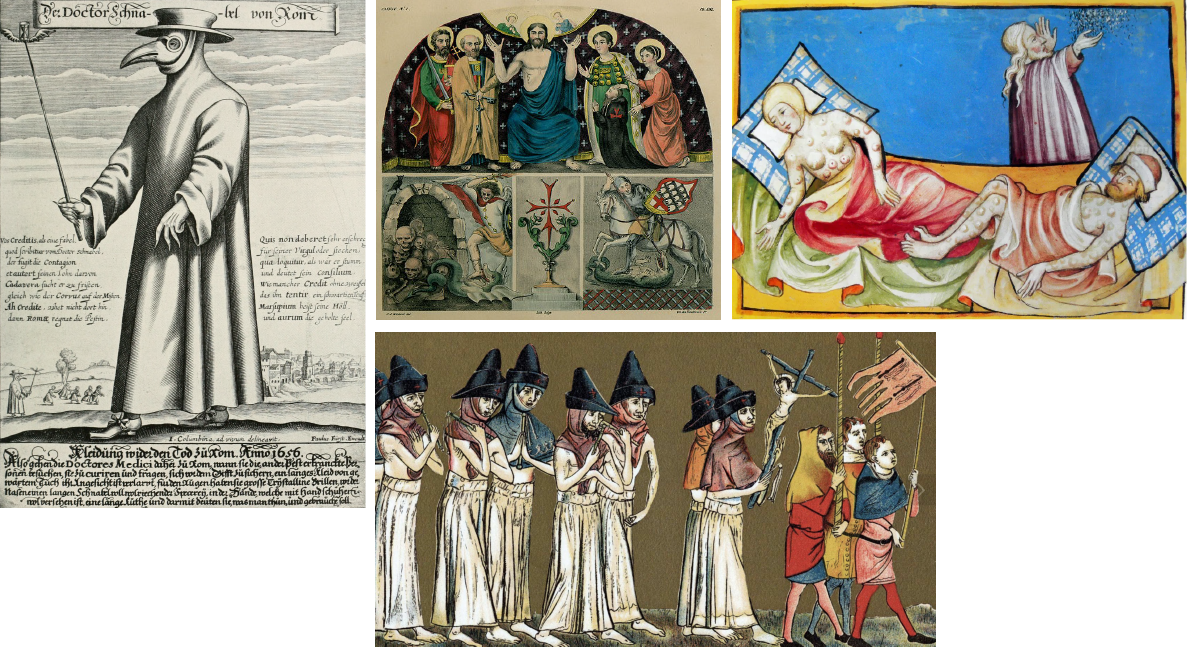
The 'Black Death' was the name given to the plague pandemic that struck all of Europe (1348-1350) and wiped out one-third of its population. In October 1498, a plague epidemic broke out in the Hospitaller-ruled city of Rhodes, lasting until the summer of 1500 and indiscriminately decimating the local community. In 1498, Grand Master Pierre d’ Aubusson took strict measures to contain the epidemic that struck the island.
The knights, who believed the epidemic was divine punishment, after declaring a general fast, took the icon of Panagia Karyonitissa of Apollona and, together with the Orthodox clergy and the people, undertook a processional journey towards Rhodes. The Grand Magister Pierre d'Aubusson (1423 - 1503), who repelled and defeated the Ottoman troops during the siege of Rhodes in 1480, came from the Auvergne language. The ruins of his family castle are located at Monteil-au-Vicomte in central France. As a token of gratitude, the Grand Master and the knights offered gifts to the Panagia and granted the privilege for the icon to be taken out for procession and veneration outside the church, without requiring written permission, as had been the case until then.
On the silver revetment of the double-sided icon of Panagia Karyonitissa, there is a rectangular plaque with the coat of arms of P. d’Aubusson, which the Grand Master dedicated as a token of gratitude for the divine assistance of the Theotokos during the siege and in combating the plague.
Auvergne owes its name to the Gallic people of the Arvernes [Arverni (Gaulish: Aruernoi)], who were one of the most powerful and wealthy tribes of ancient Gaul.
The “language” of Auvergne was related to the knights who originated from this cultural and historical region of France, which is located in the center of the “Massif Central” mountainous central region.
The Auvergne language head was called the marshal and was responsible for the supplies of the army and navy, and the control of the armory.
Each language was responsible for the defense of a section of the city's fortifications. The Auvergne language was responsible for the defense of the section of the walls that extended from the section of the closed gate and the tower of St. George to the tower of Spain.
Each language was responsible for the defense of a section of the city's fortifications. The Auvergne language was responsible for the defense of the section of the walls that extended from the section of the closed gate and the tower of St. George to the tower of Spain. The Grand Magister Pierre d'Aubusson (1423 - 1503), who repelled and defeated the Ottoman troops during the siege of Rhodes in 1480, came from the Auvergne language. The ruins of his family castle are located at Monteil-au-Vicomte in central France.