

The Codex of Apollona
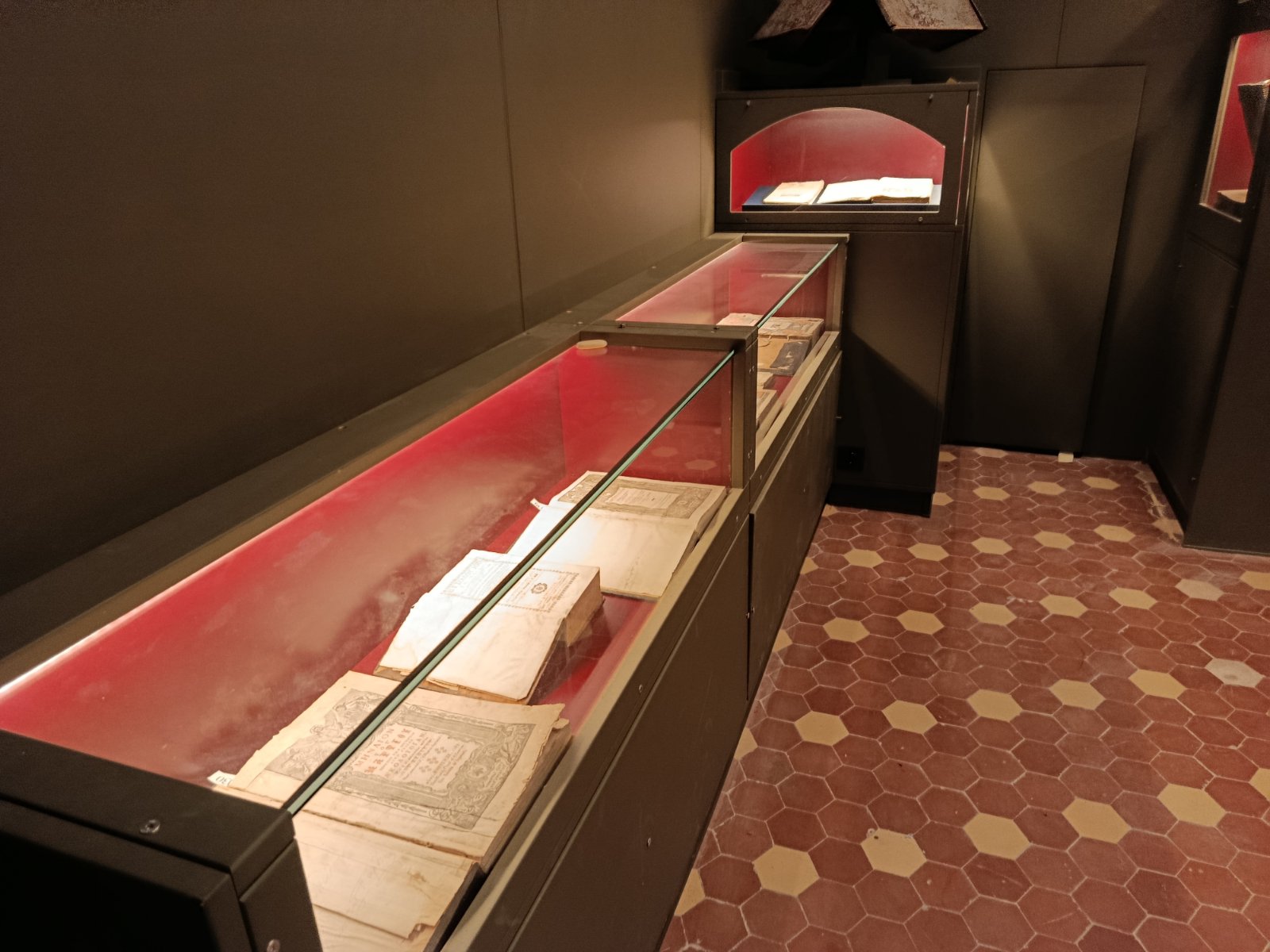
The last section of the exhibition concerns manuscripts, outlining the materials and techniques used to make them, the evolution of writing, illustration and bookbinding. The process of copying books by hand was laborious and time-consuming, and thus extremely costly.
The first books were in the form of a scroll, that is, a sheet rolled into a cylinder, with reading being done by unrolling the sheet. They were made of papyrus or parchment. From the 2nd century onwards, codices made of parchment sheets bound together appeared. The codices resembled today's books in their format. Writing materials were often reused, writing new texts after treating the surface. Later, in the second half of the 13th century, paper, a Chinese invention, reached Europe.
The production of books required skilled craftsmen, both for the texts and the decorative elements, and for the miniatures, figures and scenes which were painted in miniature size on the pages of the books.
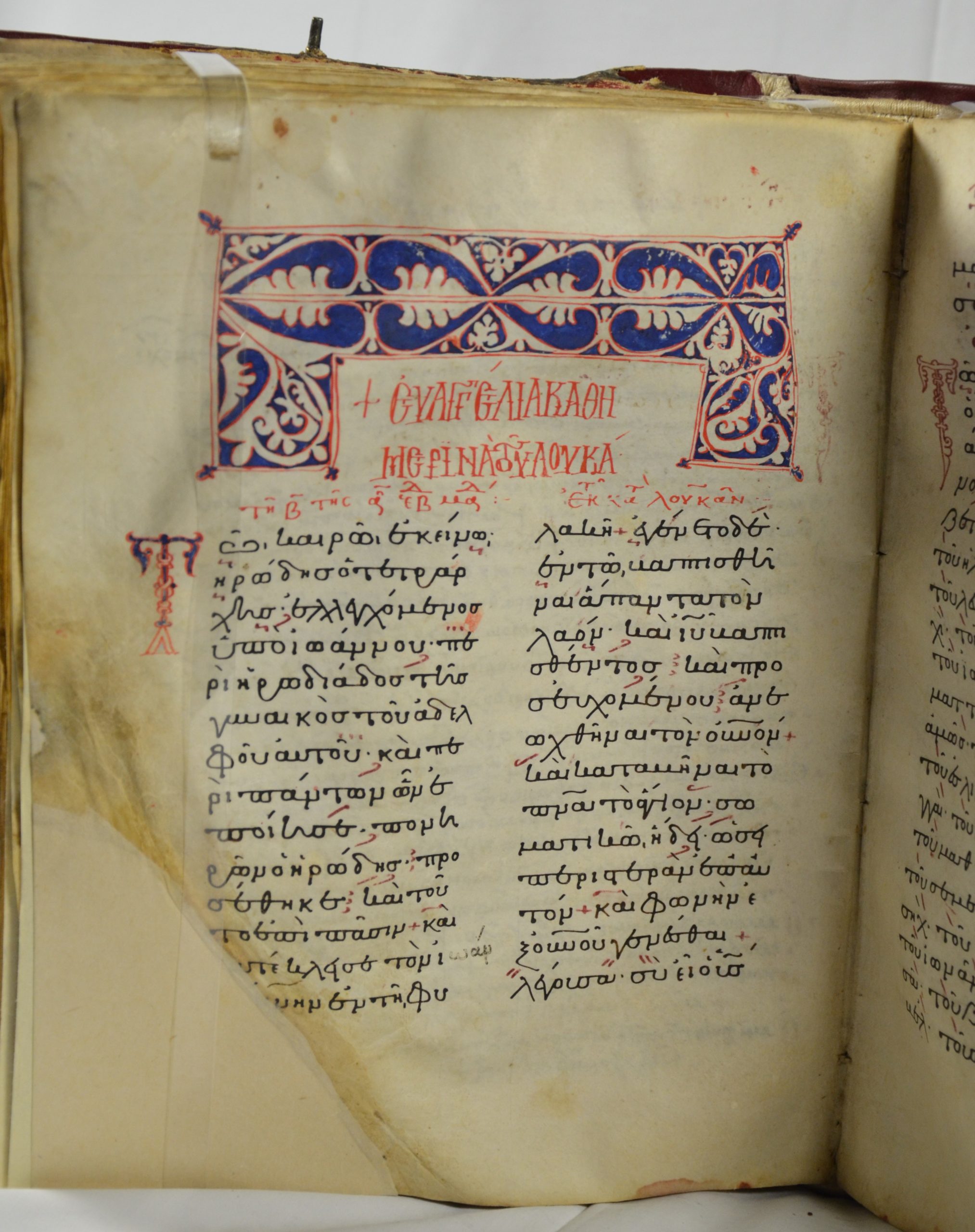
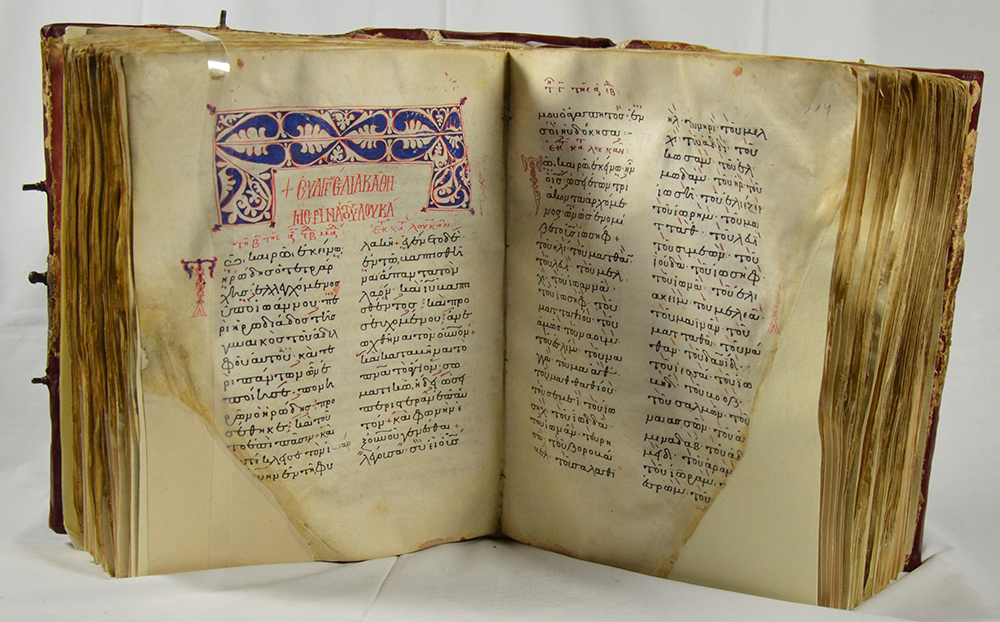
An important relic of the church of Apollona is the "Codex of Apollona", a manuscript gospel on parchment, which was the work of hieromonk Nilos, Abbot of the holy monastery of Artamitis, and dates back to 1181. The monastery maintained a remarkable library, something attested by the scholar Nikiphoros Vlemmydis, logothetis of the Ecumenical Patriarchate, who visited it in 1233.
The visitor to the exhibition will be able to obtain information about the Codex and the hieromonk Nilos through a digital application, see the titles and the initial decorative letters of the text on display, and listen to the narration of Nikiphoros Vlemmydis about his journey and stay at the Artamitis monastery. Furthermore, any visitor who so wishes can imitate a codex writer by copying a section of text by the Italian monk and geographer Cristoforo Buondelmonti (who lived in early 15th century) with a pen, and take it with them as a souvenir.